For a single crown or a small bridge of two to three units, a fast sintering cycle validated by the disc manufacturer saves several hours with no demonstrated loss of strength. For a bridge of four units or more, and even more so from six units up, manufacturers that publish a fast cycle only authorize the long program: the mass of the piece and the thinness of its connectors make rapid heating and cooling risky. The choice therefore does not depend on wanting to save time, but on the size and geometry of the restoration, and on what the disc's instructions explicitly allow for that case.
What sets a fast sintering cycle apart from a long cycle?
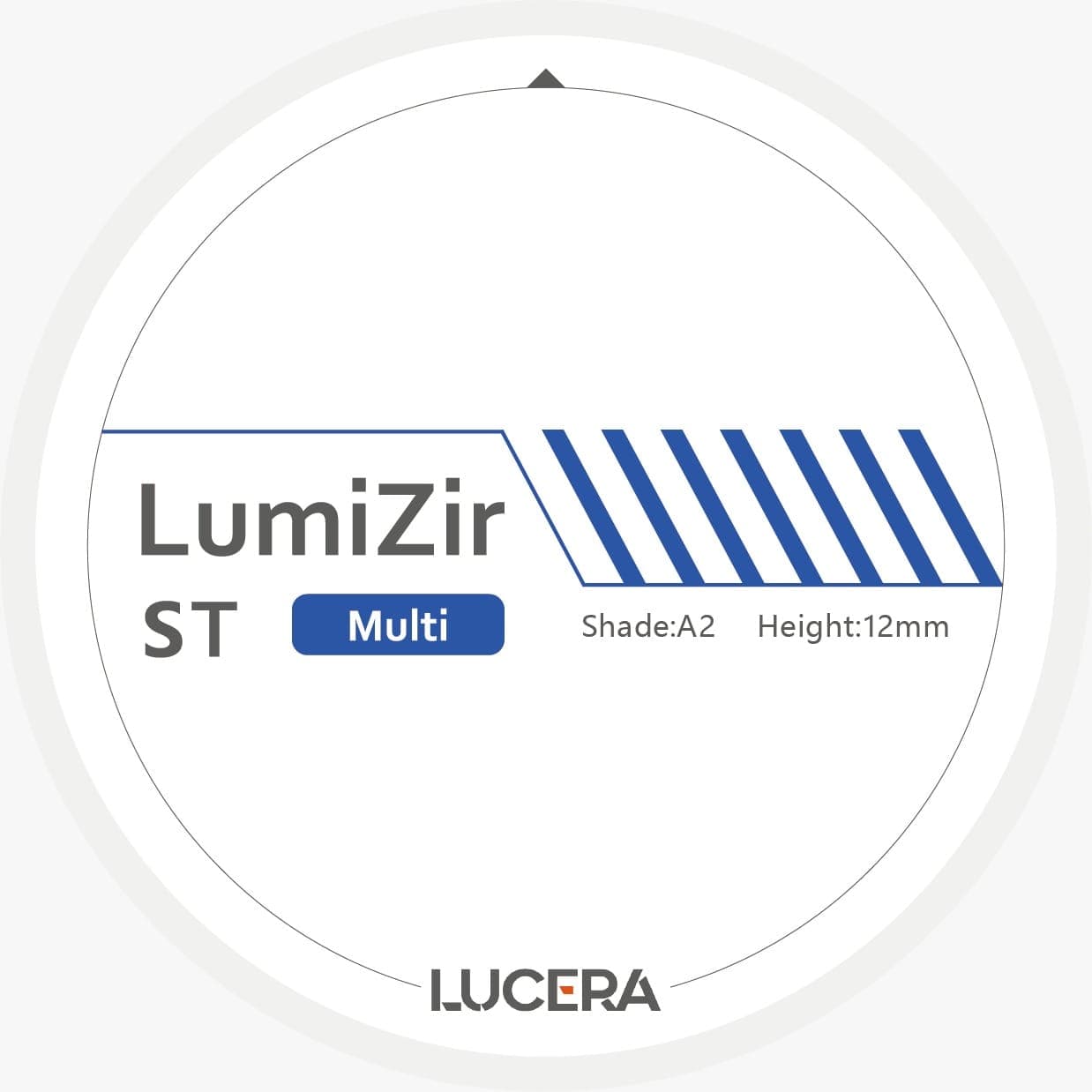
A long cycle heats and cools slowly, with a hold maintained for a long time at the sintering temperature. A fast cycle compresses these three phases. The instructions from the manufacturer of the zirconia discs distributed by Dentev set, for its recommended cycle, a heating rate of 3 to 8 °C per minute, a cooling rate of 5 to 15 °C per minute and a 120 minute hold, for a recommended temperature of 1,530 °C on the ST and SHT ranges, 1,500 °C on the 3D Pro multilayer range and 1,450 °C on the UT range. Kuraray Noritake, which manufactures KATANA zirconia, publishes on the "Sintering Schedule" page of its site, checked in October 2026, a similar general program: heating and cooling at 10 °C per minute, a two hour hold between 1,500 °C and 1,550 °C depending on the range. Its fast program brings the hold down to 30 minutes, with heating of up to 35 °C per minute and cooling of up to 45 °C per minute, for a total cycle of 90 minutes instead of 6 to 12 hours.
Does fast sintering suit a single crown?
Yes, for a small, simple piece, within the limits set by the disc manufacturer. An in vitro study published in 2022 in the Journal of Functional Biomaterials by Kongkiatkamon and Peampring, on single implant-supported translucent zirconia crowns, measured a higher average load to failure after fast sintering than after standard sintering: 3,664 N versus 3,224 N, and 2,450 N versus 2,143 N after mechanical fatigue aging. The same authors note, however, a lower Weibull modulus for fast sintering, 29.6 versus 42.7, which reflects a satisfactory average strength but greater variability in results from one piece to another.
Why do manufacturers reserve the fast cycle for small bridges?
At Kuraray Noritake, the 90 minute cycle is explicitly reserved for bridges of three units at most: beyond that, the manufacturer requires its slower general sintering program. This limit depends on the mass and geometry of the piece, not just the zirconia range used. The more units a bridge has, the greater its volume and the thickness gap between crowns and connectors, and the more likely a temperature gradient becomes between the core and the surface of the piece during a fast heating ramp.
What is the risk of fast-sintering a six-unit bridge?
A poorly controlled temperature gradient creates uneven internal stress in a piece that is already brittle in the green state. On a bridge of six units or more, the thin connectors between crowns concentrate that stress, and non-uniform sintering shrinkage between thick and thin zones, driven by a shrinkage factor between 1.220 and 1.260 according to the Dentev discs' instructions, can distort the piece or start a microcrack that only shows up after the restoration is seated in the mouth. The lower reliability measured by Kongkiatkamon and Peampring on small pieces under fast sintering, even with a satisfactory average strength, gives an added reason not to extend that cycle, without explicit manufacturer validation, to a larger and more irregular piece than a single crown.
What do the Dentev discs' instructions say about choosing the cycle?
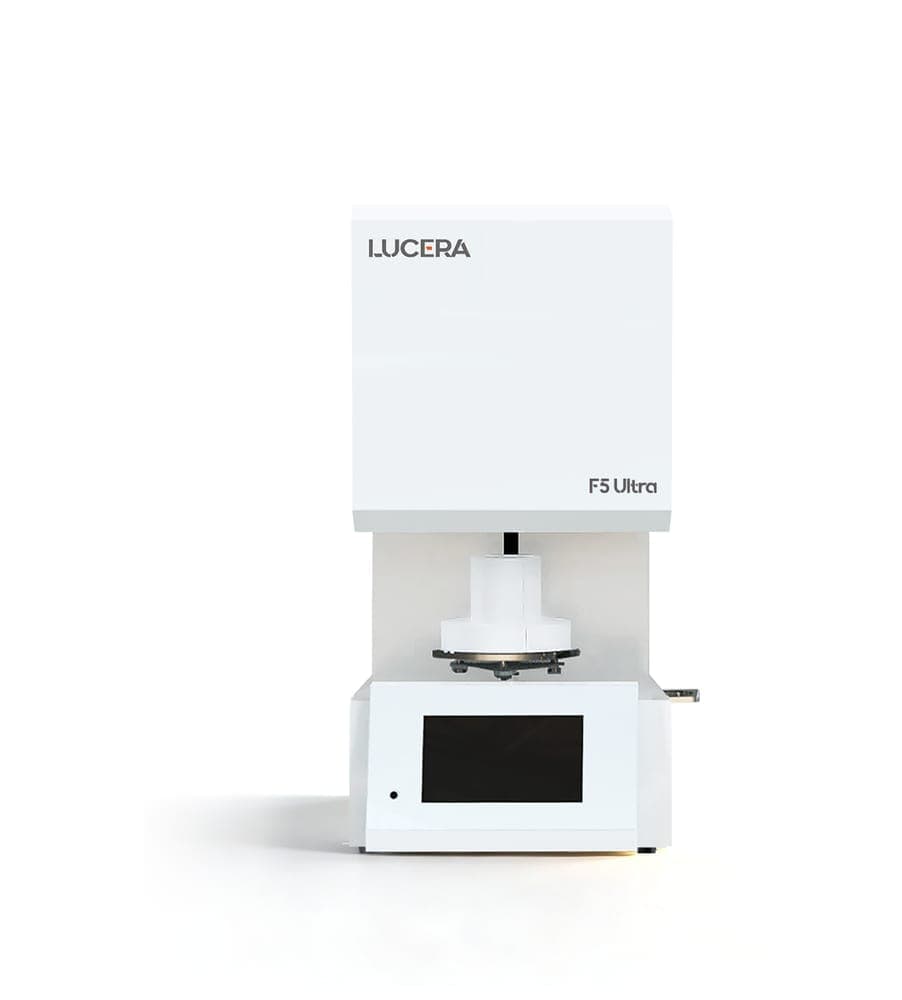
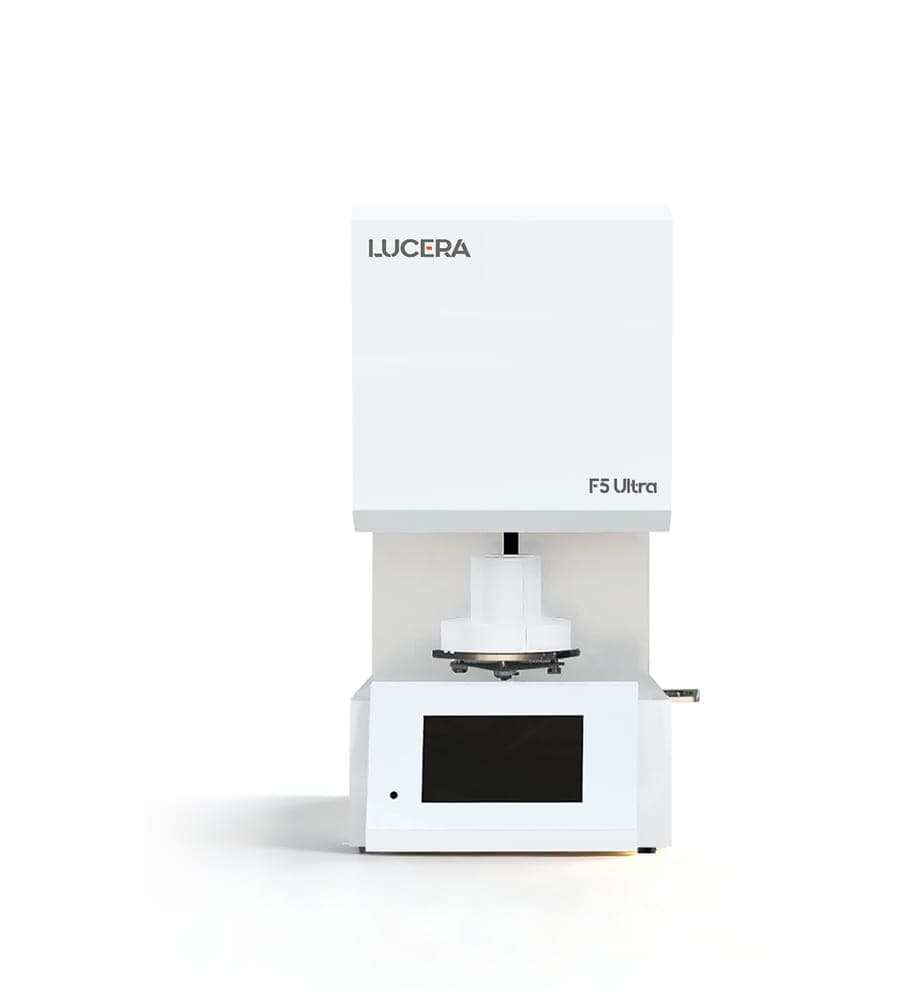
The instructions from the manufacturer of the discs distributed by Dentev publish only one recommended cycle per range, the one already cited, with no fast variant specific to these discs. The lab-validated sintering program that Dentev provides with each delivery, accessible by QR code on the delivery note, starts from that recommended cycle as a baseline to adjust to the client's furnace, not as an accelerated cycle. The Dentev catalog offers zirconia sintering furnaces in three models, with different maximum rates stated by their manufacturer: Pro at 60 °C per minute, Ultra at 200 °C per minute and Max at 250 °C per minute. A high maximum rate opens up the physical possibility of a short cycle, but does not by itself authorize exceeding the rate and the unit limit set by the instructions of the disc currently being sintered.
How to decide in practice at the lab?
Three questions, in order. Has the disc manufacturer published a validated fast cycle, and not just a furnace capable of running fast? Does the piece stay within the unit limit that fast cycle allows, generally a single crown or a small two to three unit bridge among manufacturers who publish one? Does the lab's furnace faithfully reproduce the heating, hold and cooling rates stated in the instructions? If any of these three answers is no, particularly beyond three or four units or when in doubt about the piece, the long cycle remains the lowest risk choice, for a time cost of only a few hours.
- Recommended cycle for Dentev ST and SHT discs: 1,530 °C hold for 120 minutes (instructions from the manufacturer of the discs distributed by Dentev)
- Rates of the recommended Dentev cycle: heating 3 to 8 °C/min, cooling 5 to 15 °C/min (instructions from the manufacturer of the discs distributed by Dentev)
- KATANA general program: heating and cooling at 10 °C/min, 2 hour hold between 1,500 and 1,550 °C (Kuraray Noritake, page checked October 2026)
- KATANA fast program: 30 minute hold, heating up to 35 °C/min, cooling up to 45 °C/min, 90 minute total cycle (Kuraray Noritake, page checked October 2026)
- Size limit for the KATANA fast cycle: bridges of 3 units at most, general program required beyond that (Kuraray Noritake, page checked October 2026)
- Load to failure of single translucent zirconia crowns: 3,664 N under fast sintering versus 3,224 N under standard sintering (Journal of Functional Biomaterials, 2022)
- Weibull modulus (reliability) of the same crowns: 29.6 under fast sintering versus 42.7 under standard sintering (Journal of Functional Biomaterials, 2022)
- Maximum rate stated by the manufacturer of the zirconia sintering furnaces in the Dentev catalog: 60 to 250 °C/min depending on the model (Dentev product sheet)
Sources
Instructions from the manufacturer of the zirconia discs distributed by Dentev, summarized in internal sintering documentation (CE marking, notified body 1639, EN ISO 6872 standard).
"Sintering Schedule", KATANA Zirconia, Kuraray Noritake Dental, kuraraynoritake.com, page checked October 2026.
Kongkiatkamon S., Peampring C., "Comparison of Regular and Speed Sintering on Low-Temperature Degradation and Fatigue Resistance of Translucent Zirconia Crowns for Implants: An In Vitro Study", Journal of Functional Biomaterials, volume 13, issue 4, article 281, 2022 (DOI 10.3390/jfb13040281).