Choosing the right zirconia disc is one of the decisions that most affects the aesthetic outcome and profitability of a laboratory. Between classic monolithic zirconia and multilayer discs, the indications are not the same. Here is how to decide.
Monolithic zirconia: robustness
Monolithic zirconia offers high mechanical strength, ideal for areas subject to heavy loads: molars, posterior bridges, implant abutments. Its colour is homogeneous throughout the entire mass, which simplifies milling but requires characterisation (staining, glazing) to achieve a natural result.
Recommended for: posterior restorations, long-span bridges, controlled budgets, cases where strength takes priority over pure aesthetics.
Multilayer zirconia: the natural gradient
A multilayer disc integrates a gradient of shade and translucency from the base (dentine) to the incisal edge (enamel). The result approaches the natural tooth without heavy staining, saving valuable time on anterior cases.
Recommended for: anterior crowns and veneers, aesthetic zones, laboratories looking to reduce finishing time.
Product range levels
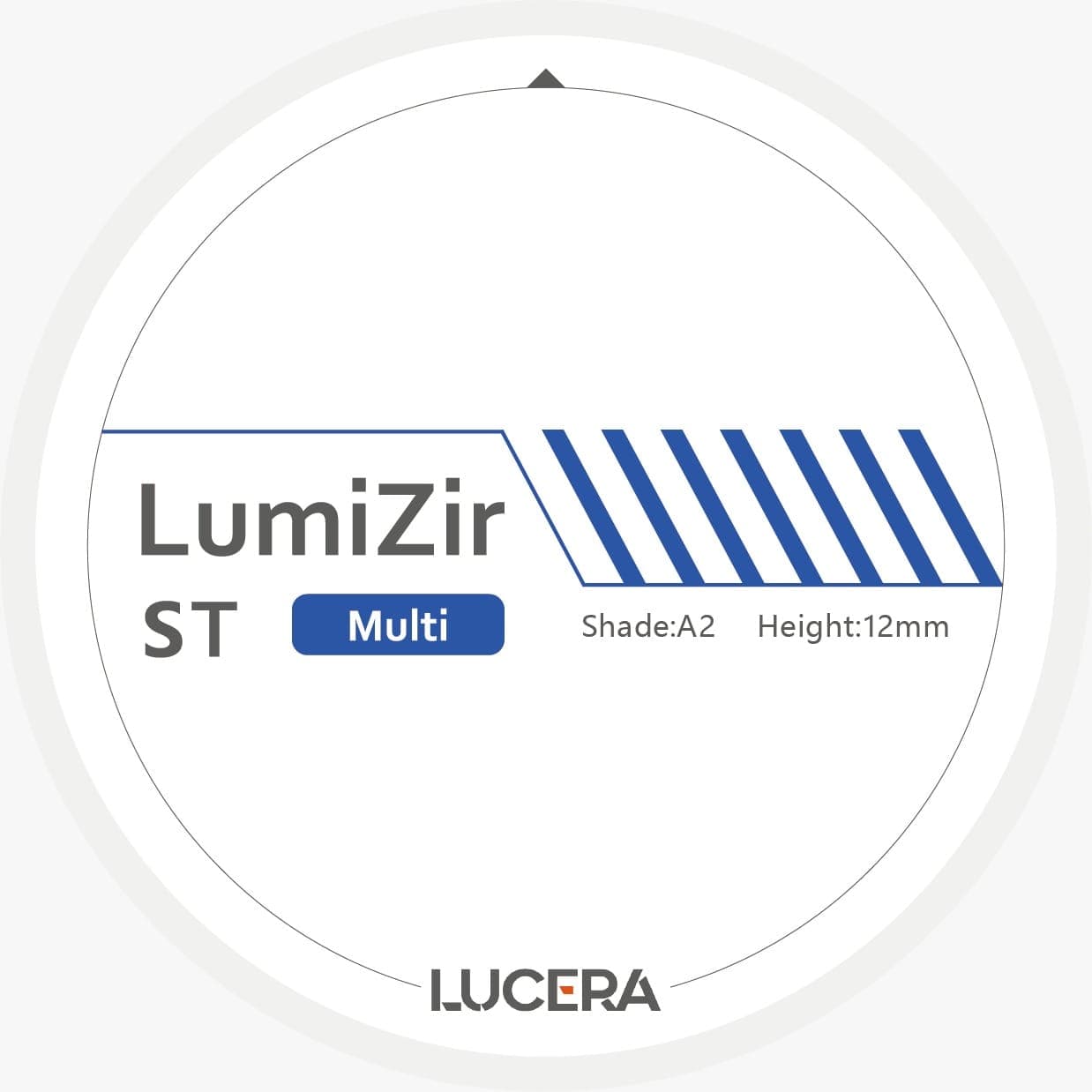
In a modern range such as LumiZir, three concepts can be found:
- ST Multi — versatile multilayer, a good strength/aesthetics compromise for the majority of cases.
- 3D Pro — more pronounced gradient of both shade AND translucency, for demanding anterior restorations.
- 5D Pro — high aesthetics, the most natural transitions, for showcase cases.
What about translucency?
The more translucent the zirconia, the more aesthetic it is… but the less resistant. The right approach: adapt translucency to the position in the arch. A highly translucent 4Y/5Y for the anterior region, a more opaque and resistant 3Y for the posterior region.
Do not overlook sintering
Regardless of the disc, the sintering curve determines the final shade, translucency and strength. A reliable sintering furnace and a respected curve are worth as much as the choice of the disc itself.
In summary
- Posterior / heavy load → monolithic or high-strength multilayer.
- Anterior / aesthetics → 3D or 5D multilayer.
- Always: adapt translucency to position and pay close attention to sintering.
The right choice depends on your case mix. If in doubt, a technical advisor can help you put together the right disc selection for your volume.