Choosing between 3Y, 4Y, 5Y or multilayer zirconia mostly depends on the zone being restored and the thickness available after preparation, not on a trend. For a bridge or a posterior crown, a class 5 type II zirconia (ST, SHT or 3D Pro grades) with a declared flexural strength of at least 800 MPa remains the safe choice, from 1.0 mm thickness in monolithic form according to the instructions for use reviewed here. For an anterior crown or veneer where aesthetics matter most, an ultra-translucent multilayer zirconia (class 4, at least 500 MPa declared) can go down to 0.4 mm depending on the grade and manufacturer. Every figure below comes from an instructions-for-use document that was actually read, none is a rough average.
What do 3Y-TZP, 4Y-TZP and 5Y-TZP mean?
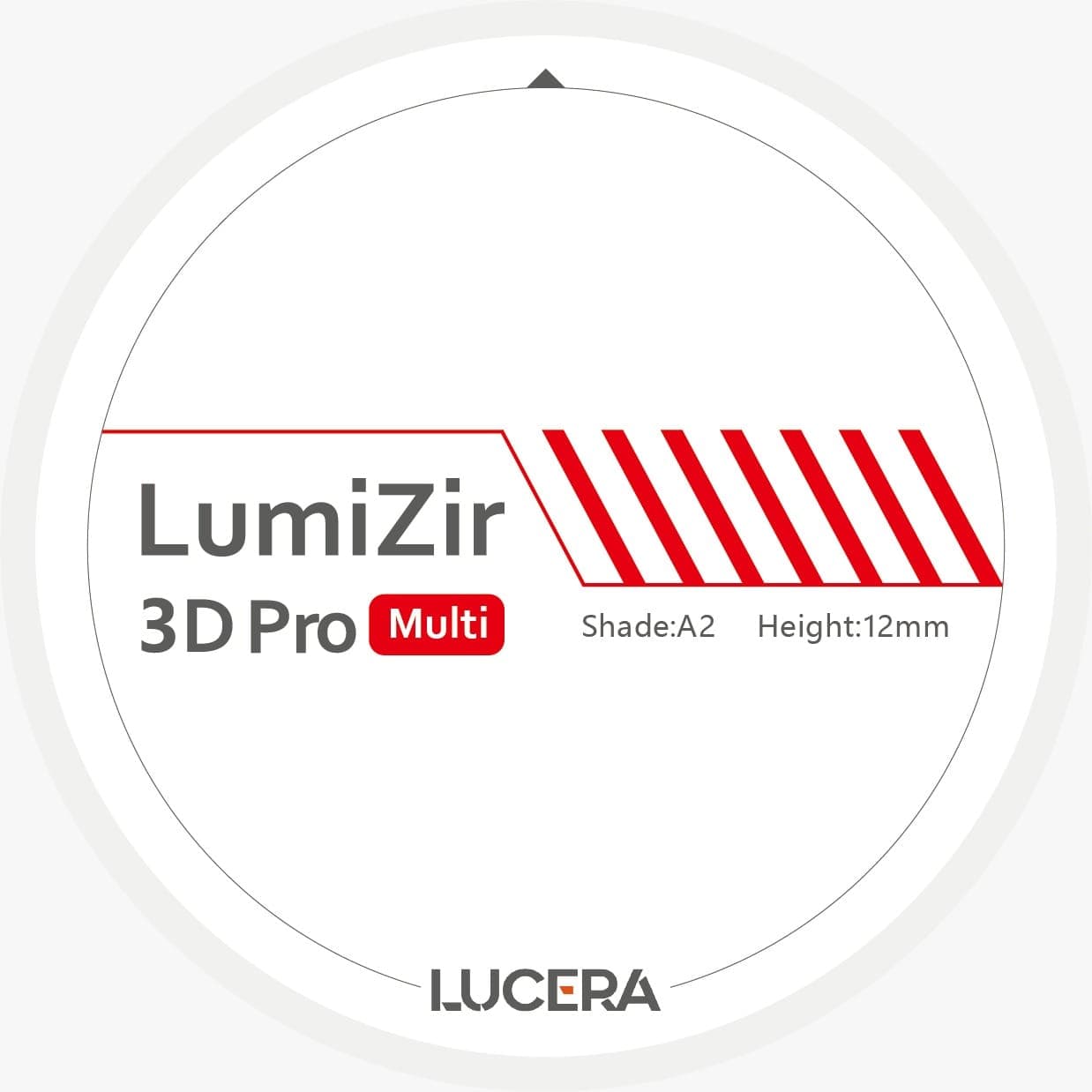
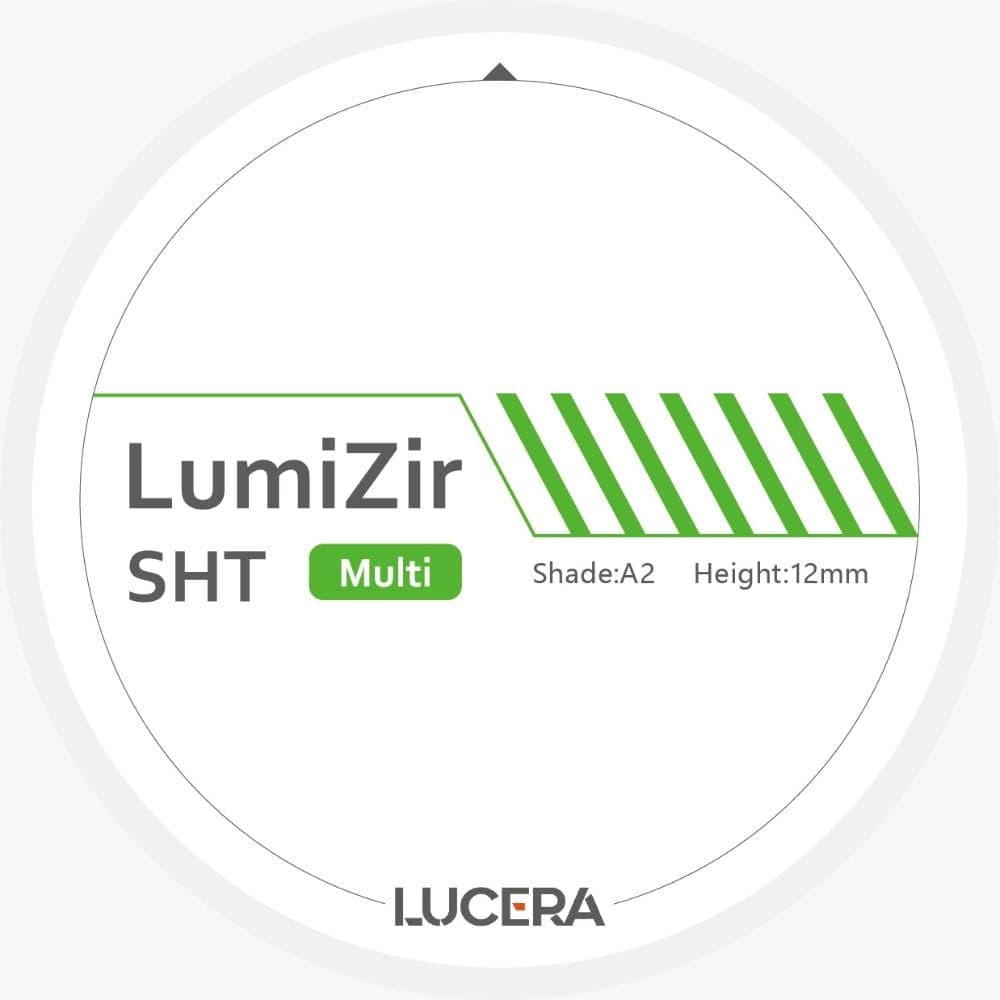
The number before TZP is the molar percentage of yttrium oxide that stabilises the crystalline structure of zirconia (tetragonal zirconia polycrystal). As that percentage rises from 3% to 5%, the proportion of cubic phase in the sintered material grows, which improves translucency but lowers mechanical strength and fracture toughness. The EN ISO 6872 standard classifies dental zirconia by strength rather than by yttria content: class 5 type II covers high-strength zirconia used for frameworks, crowns and bridges, from the posterior to the anterior region; class 4 covers more translucent zirconia, reserved for anterior crown frameworks and monolithic anterior crowns. Among the zirconia discs distributed by Dentev, the ST, SHT and 3D Pro multilayer grades fall under class 5 type II, with a flexural strength declared by the manufacturer of at least 800 MPa; the UT grade, ultra-translucent, falls under class 4, with at least 500 MPa declared, according to the manufacturer's instructions for use for the discs.
What is the minimum thickness for a monolithic anterior zirconia crown?
For a monolithic anterior crown in high-translucency multilayer zirconia, close to the 4Y-TZP and 5Y-TZP designations (commercial grades UTML or STML), Kuraray Noritake's technical guide for KATANA Zirconia sets a minimum wall thickness of 0.8 mm. For a very high translucency zirconia such as HTML PLUS, the same guide goes down to 0.4 mm minimum in the anterior region. These values assume a regular preparation, without sharp angles or local thin spots, and a correct fit of the piece before sintering: a zone thinner than this minimum raises the risk of fracture in the mouth, even if the preview on the design screen looks adequate.
What is the minimum thickness for a monolithic posterior zirconia crown?
In the posterior region, where chewing loads are higher, the same Kuraray Noritake guide recommends 1.0 mm minimum for the UTML and STML grades, and 0.5 mm minimum for the HTML PLUS grade. A posterior crown in monolithic 3Y zirconia, stronger but less translucent, accepts similar thicknesses in practice; the instructions for use of the manufacturer of the batch actually used remain the reference to follow first, because safety margins vary between grades and between manufacturers.
What connector cross-section does a zirconia bridge need?
The strength of a zirconia bridge depends as much on the connector cross-section as on the pontic thickness. For the UTML and STML grades, Kuraray Noritake's guide requires a minimum connector cross-section of 12 mm² anterior and 16 mm² posterior, with a bridge limited to three connected units anterior for UTML and three posterior units for STML. For the HTML PLUS grade, stronger but less translucent, the minimum cross-section drops to 9 mm² both anterior and posterior, and the manufacturer recommends this grade from four connected units upward. An undersized connector remains a frequent cause of zirconia bridge fracture at the laboratory, ahead of any sintering defect.
Which Dentev zirconia grade fits which indication?
Among the zirconia discs distributed by Dentev, the ST, SHT and 3D Pro multilayer grades, class 5 type II, cover frameworks, crowns and bridges from the posterior region to the anterior, with a flexural strength declared by the manufacturer of at least 800 MPa. The UT grade, ultra-translucent and class 4, is used for anterior crown frameworks and monolithic anterior crowns, with at least 500 MPa declared. These indications and values come from the instructions for use supplied with each disc, which prevail in case of doubt, not from a general estimate.
Why follow the batch instructions rather than one single figure for all zirconia?
Minimum thicknesses vary between manufacturers for the same 3Y, 4Y or 5Y designation, because batch formulation, grain size and the sintering cycle all influence the final strength of the material. A figure read in a general article never replaces the instructions for use of the batch actually in hand: the shrinkage factor, specific to each box, adds to this variability and changes the milled piece before sintering even starts. Checking the instructions for use at every batch change, not only when buying from a new manufacturer, avoids most remakes for fracture or insufficient thickness.
- Flexural strength, class 5 type II zirconia (ST, SHT, 3D Pro): at least 800 MPa declared (instructions for use, manufacturer of the discs distributed by Dentev)
- Flexural strength, class 4 zirconia (UT): at least 500 MPa declared (instructions for use, manufacturer of the discs distributed by Dentev)
- Minimum thickness, monolithic anterior crown UTML/STML: 0.8 mm (KATANA Zirconia technical guide, Kuraray Noritake)
- Minimum thickness, monolithic posterior crown UTML/STML: 1.0 mm (KATANA Zirconia technical guide, Kuraray Noritake)
- Minimum thickness, anterior crown HTML PLUS: 0.4 mm (KATANA Zirconia technical guide, Kuraray Noritake)
- Minimum thickness, posterior crown HTML PLUS: 0.5 mm (KATANA Zirconia technical guide, Kuraray Noritake)
- Minimum connector cross-section, posterior bridge UTML/STML: 16 mm² (KATANA Zirconia technical guide, Kuraray Noritake)
- Shrinkage factor of the zirconia discs distributed by Dentev: 1.220 to 1.260 depending on the batch (manufacturer's instructions for use)
Sources
Instructions for use from the manufacturer of the zirconia discs distributed by Dentev (ST, SHT, 3D Pro, UT grades), French-language version, CE marking, notified body 1639, EN ISO 6872 standard, summarised in internal sintering documentation.
"FAQ KATANA Zirconia Materials," Kuraray Noritake Dental, kuraraynoritake.com/katana/eu/faq/, page accessed October 2026, copyright 2018 Kuraray Noritake Dental Inc.